Liver Health And Metabolism: Why The Liver Controls More Than You Think
The liver is the principal regulator of systemic metabolism, and modern lifestyles place it under unprecedented strain.

Introduction
The liver is the largest internal organ and arguably the most metabolically consequential. It governs glucose production and storage, lipid handling, protein synthesis, hormone clearance and detoxification. Subtle changes in hepatic function ripple across every other metabolic system in the body.
Liver Function And Blood Sugar
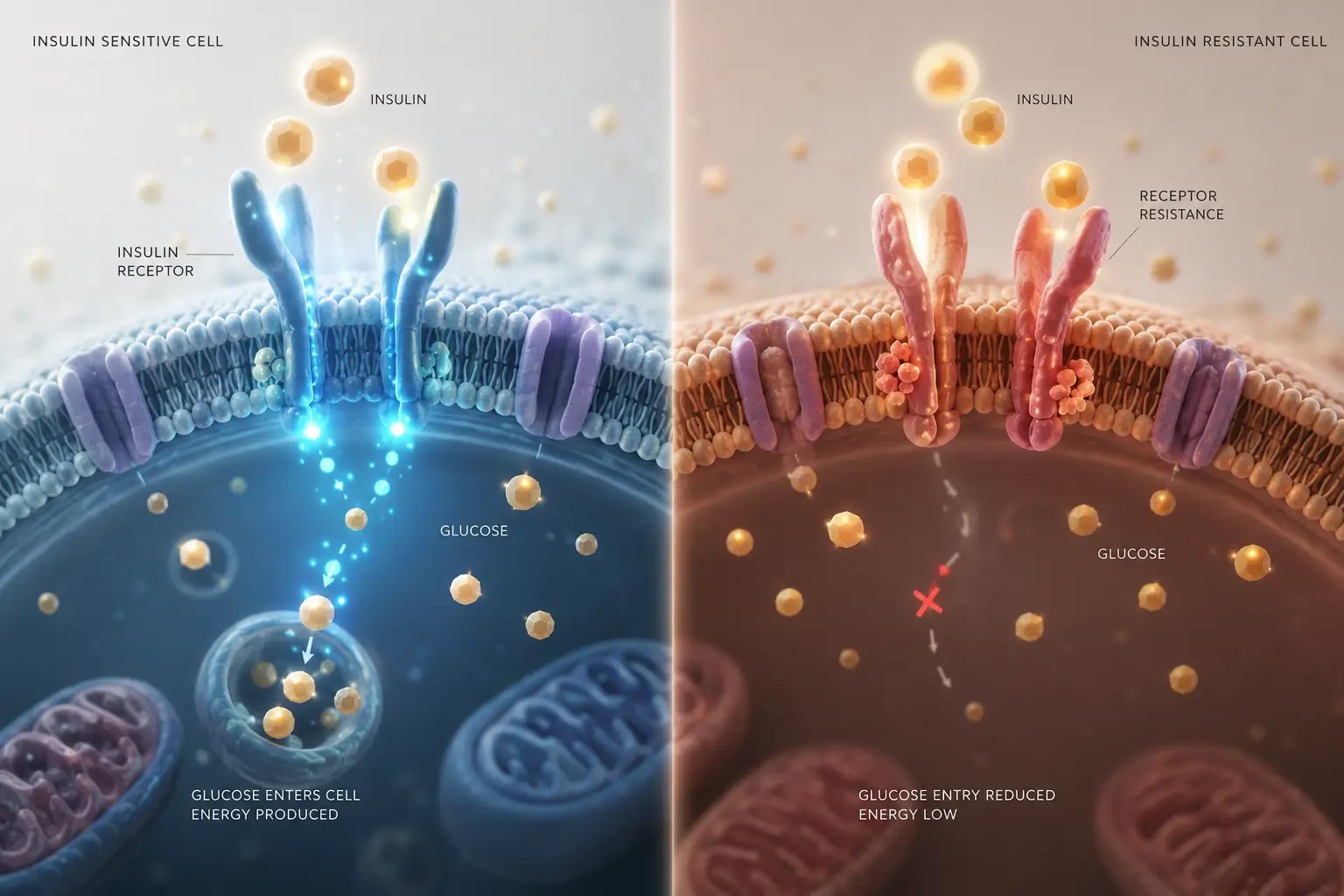
Between meals and overnight, the liver releases glucose into circulation to maintain stable blood sugar. In insulin-resistant individuals, this output becomes inappropriately elevated, contributing substantially to fasting hyperglycemia. Restoring normal hepatic insulin sensitivity is therefore one of the highest-leverage metabolic interventions available.
Fatty Liver Disease
Non-alcoholic fatty liver disease (NAFLD) — recently renamed metabolic-associated fatty liver disease (MAFLD) — affects approximately 25% of adults globally. It is closely linked with insulin resistance, abdominal adiposity and metabolic syndrome, and progresses in some individuals to non-alcoholic steatohepatitis (NASH), fibrosis and cirrhosis.
Metabolic Syndrome
Hepatic fat accumulation is both a consequence and a driver of broader metabolic dysfunction. Excess liver fat impairs insulin signalling and contributes to dyslipidemia, hypertension and inflammatory markers across the body.
Berberine Research In Liver Health
Multiple randomised trials have examined berberine in adults with NAFLD. Reported outcomes include reductions in hepatic fat content on imaging, improvements in liver enzymes, and corresponding improvements in glycemic and lipid markers. Mechanistically, berberine suppresses hepatic lipogenesis through SREBP-1c downregulation and improves hepatic insulin sensitivity through AMPK activation.
Practical Considerations
Berberine's hepatic effects appear most pronounced in adults with established metabolic dysfunction. Its safety profile in liver-impaired patients should be discussed with a qualified clinician.
- The liver governs glucose, lipid and hormone metabolism across the whole body.
- Inappropriate hepatic glucose output drives fasting hyperglycemia in insulin resistance.
- Fatty liver disease now affects roughly one in four adults globally.
- Berberine reduces hepatic fat content and improves liver enzymes in NAFLD trials.
Frequently Asked Questions
Can berberine reverse fatty liver?
Trials show meaningful reductions in liver fat content over 3–6 months, particularly when combined with dietary changes addressing refined carbohydrates and alcohol.
- [1] Yan HM et al. — Efficacy of Berberine in Patients with Non-Alcoholic Fatty Liver Disease — PLOS One, 2015.
- [2] Zhang Y et al. — Treatment of Type 2 Diabetes and Dyslipidemia with Berberine — J Clin Endocrinol Metab, 2008.
Beyond Better Research Team. (2025). Liver Health And Metabolism: Why The Liver Controls More Than You Think. Beyond Better Research Library. Retrieved from https://bebeyondbetter.com/research-library/berberine-liver-health
Continue Reading.


Better Was Never Enough.
97% HPLC verified purity. Water-only extraction. Full transparency at every batch.