
The Gut Microbiome Connection: Why Your Metabolism Begins In The Digestive System
The gut microbiome is increasingly recognised as a central regulator of metabolic health.

Introduction
The human gut microbiome consists of an estimated 38 trillion microorganisms — roughly equal in number to all human cells in the body. Their collective genetic content vastly exceeds the human genome and contributes substantially to digestion, immunity, neurotransmitter production and metabolic regulation.
Gut Bacteria And Metabolism
Specific microbial populations are now established as direct contributors to metabolic health. Akkermansia muciniphila supports intestinal barrier integrity. Faecalibacterium prausnitzii produces butyrate, a short-chain fatty acid with potent anti-inflammatory effects. The relative abundance of these populations correlates with metabolic markers across large observational cohorts.
Microbiome Diversity
Diversity — the variety of microbial species present — is one of the most reliable indicators of microbiome health. Adults with metabolic dysfunction consistently show reduced diversity compared with metabolically healthy controls. Diet diversity, fibre intake, sleep quality and antibiotic exposure all shape microbial diversity.
Digestive Inflammation
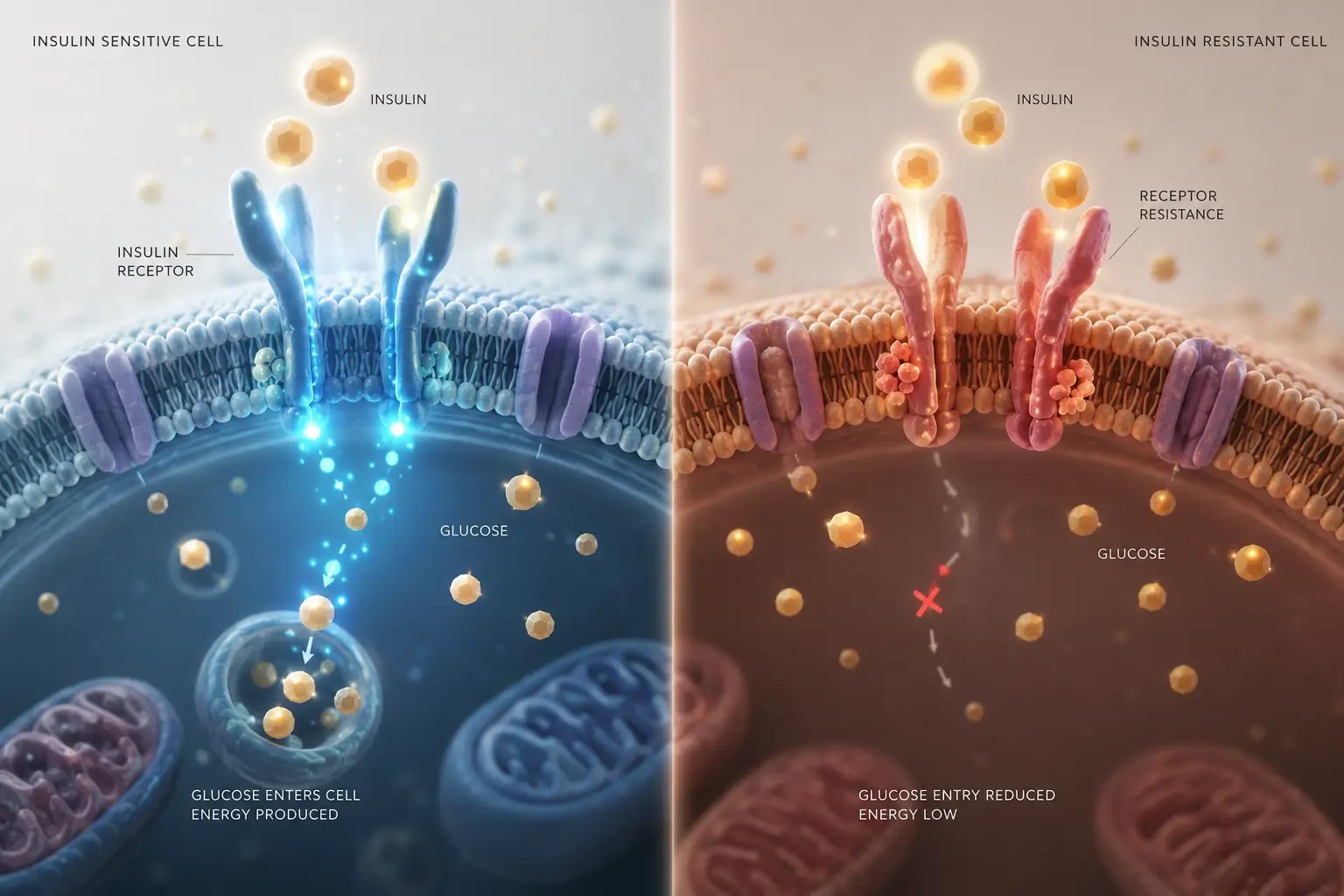
When the intestinal barrier is compromised, bacterial endotoxins enter systemic circulation in a condition called metabolic endotoxemia. This chronic low-grade exposure drives systemic inflammation and contributes directly to insulin resistance. Restoring barrier integrity is therefore an upstream metabolic intervention.
Microbiome And Obesity
Specific microbial patterns associate with obesity in both observational and interventional studies. The ratio of Firmicutes to Bacteroidetes, while no longer considered the simple marker it was once thought to be, illustrates the broader principle: microbial composition influences how efficiently energy is extracted from food and how inflammatory the digestive environment becomes.
Berberine's Effect On Gut Bacteria
Berberine has documented effects on gut microbial composition. Studies show increased abundance of Akkermansia muciniphila and short-chain fatty acid producers, with reductions in opportunistic pathogens. Because berberine has relatively low oral bioavailability — only a few percent reaches systemic circulation — its concentrations in the gut lumen are high, making the gastrointestinal tract a major site of action.
This microbiome modulation is increasingly understood as a substantial contributor to berberine's metabolic effects, distinct from its direct cellular mechanisms.
- The gut microbiome contributes substantially to metabolic regulation through immune, neuroendocrine and barrier mechanisms.
- Microbial diversity correlates with metabolic health.
- Compromised intestinal barrier produces metabolic endotoxemia, an upstream driver of insulin resistance.
- Berberine modulates gut microbial composition favourably, with high luminal concentrations from oral dosing.
Frequently Asked Questions
Does berberine kill good bacteria?
Clinical and laboratory data suggest berberine selectively favours beneficial populations rather than producing broad-spectrum disruption.
- [1] Cani PD et al. — Gut Microbiota and Metabolic Endotoxemia — Diabetes, 2007.
- [2] Habtemariam S — Berberine Pharmacology and the Gut Microbiome — Pharmacological Research, 2020.
Beyond Better Research Team. (2025). The Gut Microbiome Connection: Why Your Metabolism Begins In The Digestive System. Beyond Better Research Library. Retrieved from https://bebeyondbetter.com/research-library/berberine-gut-microbiome
Continue Reading.


Better Was Never Enough.
97% HPLC verified purity. Water-only extraction. Full transparency at every batch.